Dubai has mastered the art of making winter feel like summer with better lighting. But for the Gulf’s most discerning travellers, another beachfront suite, another temperature-controlled pool and another perfectly choreographed sunset are beginning to lose their appeal. The ultimate luxury is no longer about escaping the heat in style; it is about escaping it altogether. Think biting Alpine air, snow-covered peaks, the profound luxury of silence and mountains that make no concessions to anyone’s expectations. Austria understands this better than most. With the self-assurance of a nation that has been perfecting the rituals of winter since the Habsburgs were still arranging their afternoons, it offers something money can buy but few destinations can truly deliver: the rare pleasure of being somewhere genuinely cold, gloriously still and gloriously indifferent to the demands of modern luxury.
The numbers, as ever, tell a story the brochures prefer to whisper. Austria’s tourism industry is no longer merely recovering: in 2025, the country recorded a new high of 157.3 million overnight stays, an increase of 1.9 per cent on the previous year. Michael Tauschmann, the Austrian National Tourist Office’s Head of Markets for the Middle East and India, is not a man given to hyperbole, but his diagnosis of the Gulf market is surgical in its precision. “Among young Arab men and women, learning winter sports such as skiing and snowboarding is very much in vogue,” he observes. “Rather than practising in indoor ski centres at home, they prefer to learn in Switzerland or, increasingly, Austria.” The run-up to Christmas, with its Advent markets, is, he notes with the faintest hint of satisfaction, “another draw for female travellers”. The entire communication apparatus of the market, he adds, operates through WhatsApp; emails, those quaint relics, go largely unanswered; bookings are made at the last minute; and “absolute flexibility and spontaneity” are the non-negotiable currencies of the contemporary Gulf traveller. The old luxury was a marble lobby and a deferential concierge. The new luxury is the right to decide on Thursday that you will be in the Alps by Saturday, and for no one to raise an eyebrow.
What makes the Austrian proposition so seductive to a millennial or Gen Z traveller from the Emirates is not merely the snow – snow, after all, can be manufactured – but the narrative architecture of the place. Austria does not do winter as a theme park. It does winter as an inherited condition, a state of being as natural as breathing. And within that condition, it has quietly assembled a portfolio of properties that speak less to the Instagram grid and more to the cultivated sensibility that craves a certain textural intelligence: the cool marble of a Viennese palace, the untreated wood of an Alpine chalet, the mineral warmth of a thermal spring, the precise, almost monastic restraint of a private sauna overlooking a frozen river.
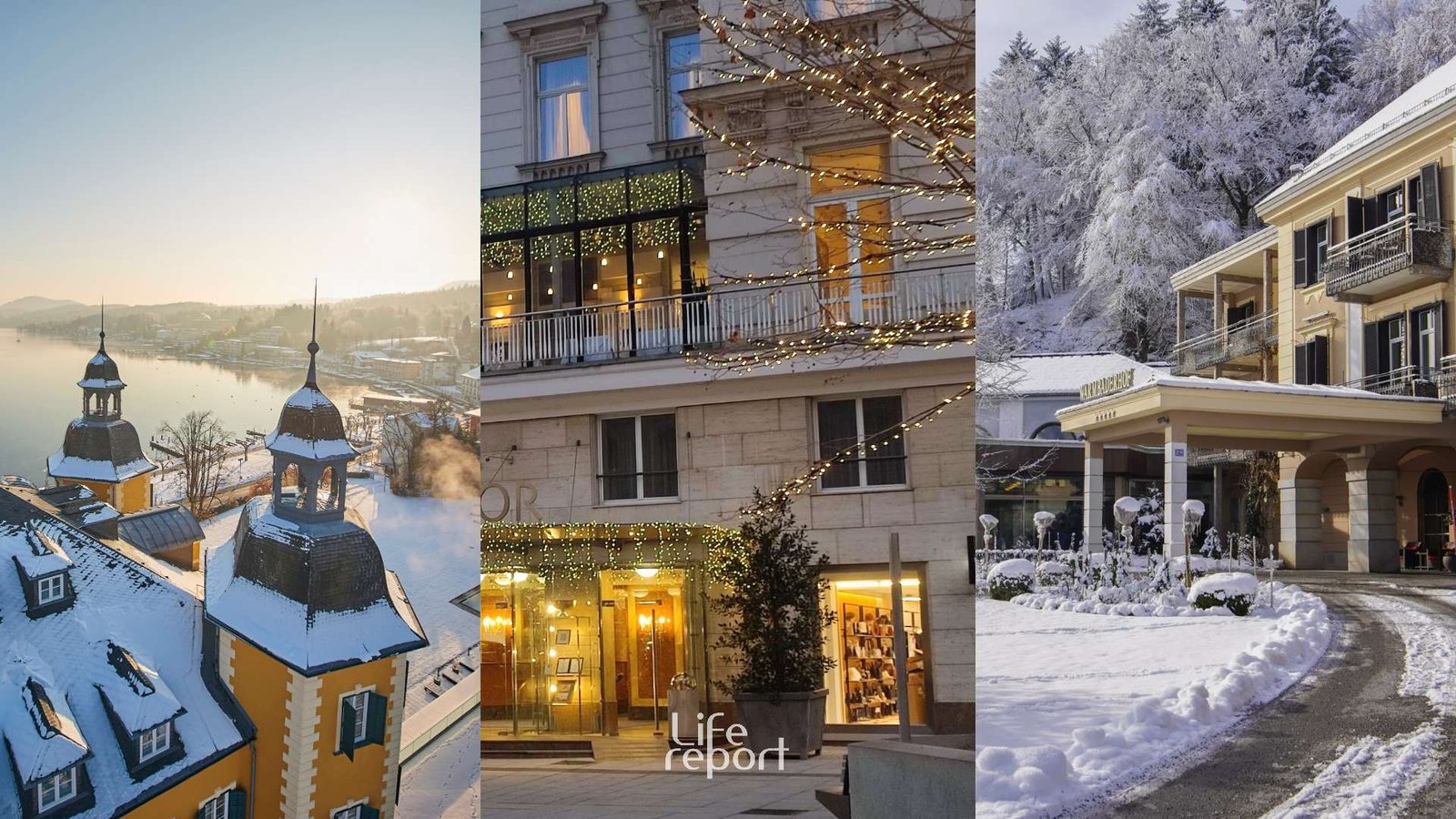
Begin, as the most discerning itineraries often do, in Carinthia. The five-star Hotel Warmbaderhof, in Villach, sits beneath Mount Dobratsch within a twenty-hectare nature park, and its proposition is elemental: bathing in a pool built directly above the natural spring, a 1,800-square-metre VIBE Spa, and the restorative, almost medicinal warmth of thermal waters that have been doing their quiet work since long before wellness became an industry. The suite offer – breakfast and 20 per cent off suite rates for stays of two nights or more – is available in the crystalline window between 8 and 21 December 2026 and again from 6 to 20 January 2027. Nearby skiing and winter hiking provide the necessary counterpoint of exertion, the better to appreciate the subsequent stillness. This is not a hotel that shouts. It is a hotel that understands the sophisticated traveller’s deepest need: to be left alone, but beautifully.
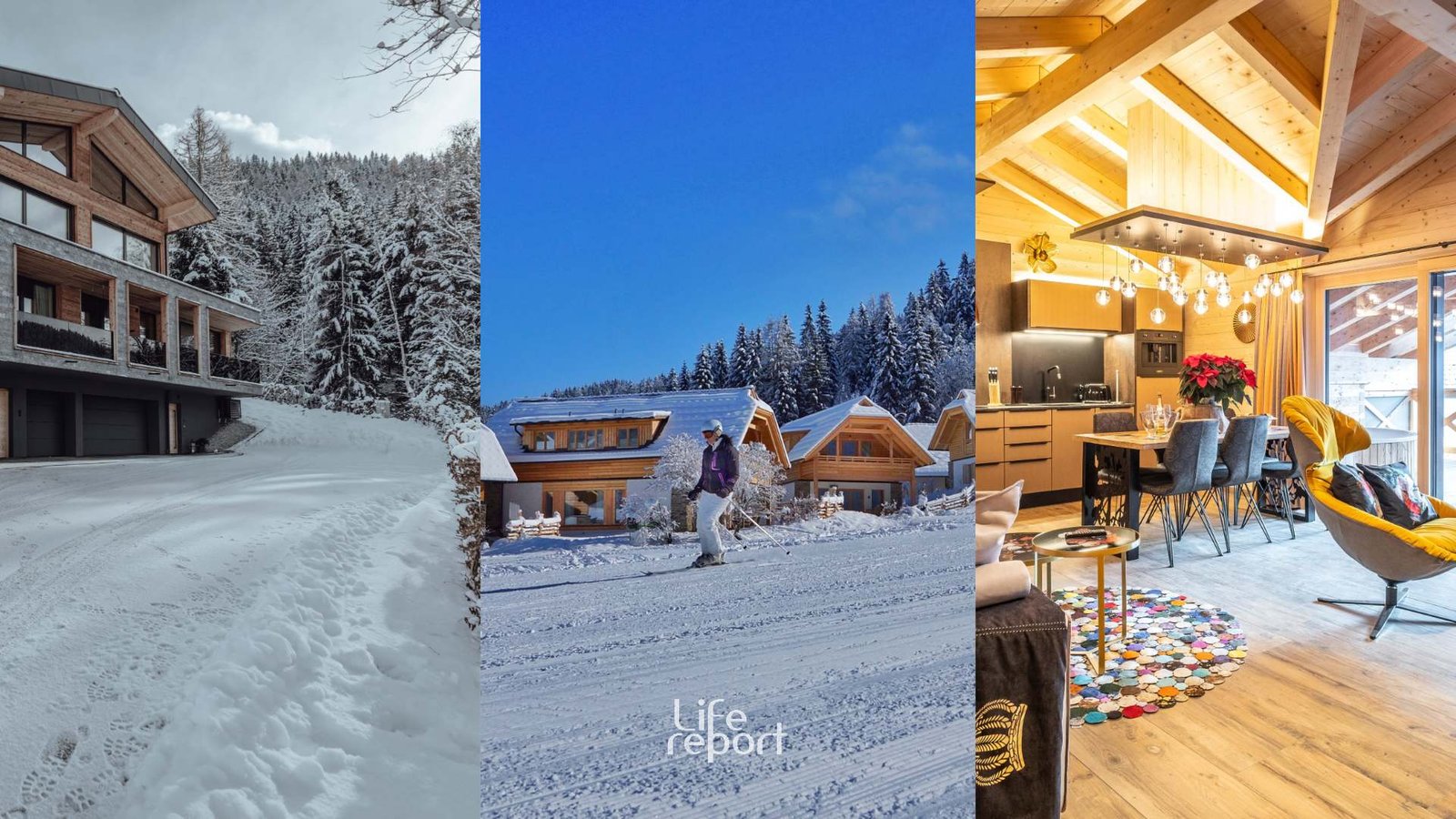
For those whose idea of privacy is measured in square metres and the ability to ski directly to one’s door, Studio 963 in Dienten am Hochkönig offers 560 square metres of private living space across five bedrooms, with a private indoor pool, a sauna, a whirlpool, a gym, a children’s playroom and a 120-inch screen for film nights – a configuration that manages the neat trick of entertaining every generation while allowing each to forget, at least temporarily, that the others exist. The 130-square-metre terrace adds another dimension to the experience. The ski-in access, snow conditions permitting, is the kind of detail that separates the genuinely well-conceived chalet from the merely large one.
View this post on Instagram
Vienna, of course, requires its own chapter. The Almanac Palais Vienna, which opened in March 2023 inside a pair of restored nineteenth-century palaces overlooking the Stadtpark, is the city’s most articulate argument for the compatibility of heritage and contemporary nerve. The original neo-Baroque façades and heritage marble doorways remain intact, but Chilean designer Jaime Beriestain has orchestrated an interior of rich woods, creamy beiges, and silver and gold hues, animated by a rotating collection of works from the Galerie bei der Albertina Zetter. The hotel also houses a drawing by Gustav Klimt in its dedicated Klimt Suite, offering guests an exceptional opportunity to encounter the artist’s work in a hotel setting. Family-friendly connecting suites, a curated Kids’ Guide and a fourteen-metre indoor pool make it a base of unusual grace for a city whose Christmas markets – the Rathausplatz affair runs from 13 November to 26 December 2026, while the Belvedere Christmas market takes place from 20 November to 31 December – are less shopping opportunities than civic theatre. New Year’s Eve brings a gala dinner at Donnersmarkt, followed by festivities in the historic Heritage Rooms, an experience that manages to be both festive and restrained, which is the Viennese way.
A few streets away, Hotel Ambassador, established in 1898 and still occupying its original position on Kärntner Straße, offers a different kind of Viennese intimacy. Individually designed rooms, antique furnishings and breakfast in a winter garden overlooking Neuer Markt place the guest within walking distance of St Stephen’s Cathedral, the Hofburg and the State Opera. It is the classic Viennese experience, untouched by trends and all the more valuable for it. One does not come to Vienna for novelty. One comes for the reassurance that certain things – the weight of a silver coffee spoon, the particular hush of a concert hall before the first note, the austere beauty of a Carl Suchy & Söhne wristwatch, conceived in Vienna and made in small series in Austria and Switzerland – remain unbothered by the passing of fashion.
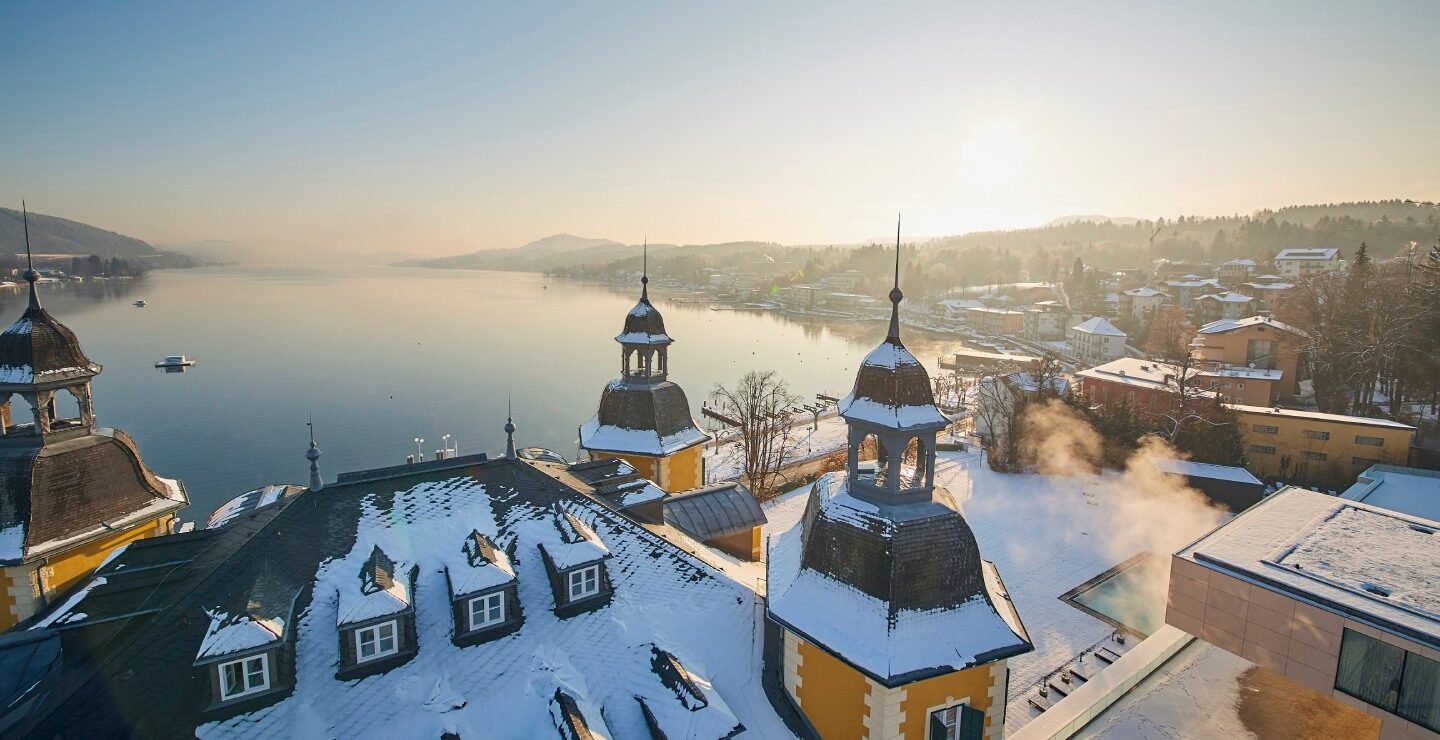
On the shores of Lake Wörthersee stands the Falkensteiner Schlosshotel Velden, a castle with more than four centuries of history and a 3,600-square-metre Acquapura Lake Spa that has earned consistent praise for its scale and serenity. The lakeside Christmas market in Velden adds a note of festive charm, while the property’s personalised concierge service and its ability to arrange alcohol-free and pork-free dining on request speak to a quiet, practical understanding of the GCC guest that is too often handled with awkwardness elsewhere. The combination of Alpine excursions at nearby Gerlitzen Alpe and the castle’s spa facilities is the Austrian formula in miniature: exertion, then absolution.
In Kaprun, The Kaprun Edition has built its reputation on a village of chalets made from untreated timber in the heart of the resort, with private-spa options that include saunas and outdoor tubs. Some of the chalets sit beside the Kapruner Ache, with terraces overlooking the water, while fully equipped kitchens allow for the kind of self-determined dining schedule that families and groups of friends, no matter how fond, eventually require. The surrounding Zell am See-Kaprun region offers skiing, snowboarding and high-altitude adventure on the Kitzsteinhorn glacier, whose snow-sure season extends from October to May and whose more than forty kilometres of pistes are complemented by five designated freeride routes for those who prefer their adrenaline with a side of geological permanence. The glacier is not a backdrop. It is a fact, and there is something deeply satisfying about a winter holiday organised around a fact rather than a fantasy.
Finally, in Bad Kleinkirchheim, Trattlers Hof-Chalets complete the collection with fourteen exclusive chalets combining ski-in/ski-out access with private wellness facilities: a panoramic sauna, a heated outdoor tub and the kind of silence that only a Carinthian village in February can provide. Horse-drawn carriage rides, tobogganing and a pony farm cater to family obligations with a lightness that never feels like a concession. And then there is Trattlers Einkehr, the chalet restaurant where Birgit and Jakob Forstnig have embraced the Slow Food movement, earning the establishment a place in the Slow Food Kärnten Guide 2026/27. It has also received 83 Falstaff points and one fork – recognition for a menu that treats regional produce not as a marketing position but as a moral one. The dry-aged steaks, the fish from the property’s own pond and the Carinthian welcome snack left in the chalet at check-in are the gestures of a place that understands hospitality as a form of inherited knowledge rather than a service protocol.
Tauschmann’s broader vision for the market is equally clear-eyed. The Middle East, he says, has become a priority market with “tremendous potential, especially when it comes to luxury travel, family holidays and wellness tourism”. The strategy includes partnerships with airlines and trusted travel companies, familiarisation trips to destinations beyond Vienna and Salzburg, and a deliberate effort to reduce seasonality by expanding year-round offerings in hiking, cycling and gastronomy. The subtext is unmistakable: Austria is not interested in being a one-season curiosity. It is interested in becoming a habit.
And perhaps that is the most seductive thing about the Austrian winter for a traveller from the Gulf. It is not a spectacle to be consumed and discarded. It is a rhythm to be entered into. The thermal water does not care about your follower count. The glacier does not adjust its schedule for your convenience. The Slow Food kitchen does not apologise for the fact that the fish was swimming in the pond this morning. In a world of increasingly frictionless, increasingly indistinguishable luxury, Austria offers something rarer: the friction of authenticity, the weight of history and the quiet, ironic pleasure of a winter that asks nothing of you except that you arrive and then, for a little while, disappear.
ALSO READ: The Zombie Cell Protocol: Inside Clé de Peau Beauté’s Two-Decade War on Time