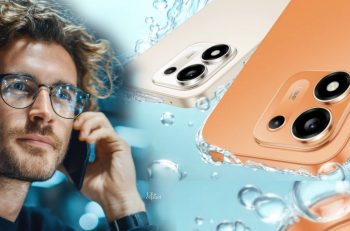
It was in one such space – a hotel atrium perfumed with something expensive and deliberately obscure – that I found myself staring not at the art, but at a man’s pocket. He was pulling out a phone. But not just any phone. This one glinted with the hue of brushed champagne, a shade that seemed less manufactured and more mined. It was the new Honor 600 Series, and it looked, for lack of a more refined term, suspiciously expensive. The catch, of course, is that it likely isn’t – not in the way we have been conditioned to believe luxury must be.
We have arrived at a curious inflection point in the annals of consumer desire. 2026 is shaping up to be the year we finally admit that the emperor’s new clothes are just a very clever polyester blend with a massive marketing budget. The global average selling price of a smartphone has nudged past the psychological $400 mark, with some analysts forecasting a staggering 14% leap to a record $523. In the gilded souks of the Middle East, where Gen Z and millennials are now outspending boomers by a factor of 3.5 on electronics and luxury goods, the game has changed. The question is no longer “Can I afford it?” but rather “Am I paying for the engineering or the ego?”

This is a city that appreciates the nuance of a bespoke scent as much as the sweep of a Zaha Hadid curve. It is a place where Honor recently had the good sense to collaborate not with another sterile tech firm, but with Arcadia, the Emirati fragrance house founded by Amna Al Habtoor, on a pair of earbuds that literally exude perfume. The message is clear: we are in an era of sensory and semantic layering. And yet, when it comes to the slab of glass and silicon we clutch for six hours a day, we have been remarkably gullible.
The reason for the impending price surge is less about innovation and more about arithmetic – and a rather inconvenient war for silicon. The DRAM and NAND chips that power our ability to doom-scroll Reels are the same ones being devoured by the insatiable maw of AI data centres. As major tech firms scramble to build the infrastructure for our coming robot overlords, memory prices have skyrocketed, with some components seeing cost increases of over 80% year on year. Supply is tightening, production is shifting towards high-margin AI servers, and the humble smartphone is left holding the bill. This is “chipflation” in its most elegant, infuriating form. And in a region where Omdia projects a 10% shipment decline due to these very cost pressures, every dirham you spend is a line in the sand.
View this post on Instagram
Into this fray of escalating price tags and shrinking value propositions steps a device that feels almost subversively pragmatic. The Honor 600 Series, with its audacious golden finish, is a study in the aesthetics of restraint. It is not gilded in the nouveau riche sense of a Dubai hotel lobby; it is more aligned with the “Quiet Wealth” movement sweeping the city’s real estate – minimalist, with a deep understanding of material integrity. The body is shaped using a unibody cold-carving process, a technique that yields a panel just 0.5 mm thin yet 200% more resistant to bending, removing the unsightly seams that betray cheaper assembly methods. It is the kind of detail you do not notice until you do, and then you cannot unsee it – much like a well-tailored suit jacket versus an off-the-rack blazer.
Hold it, and the weight (a balanced 200 g) and the 7.8 mm slim profile speak a language of premium intention without the vulgarity of heft for heft’s sake. The display, with its 0.98 mm bezel, is expected to be among the narrowest on any Android device – a sliver of black so fine it nearly vanishes, allowing the 200 MP main sensor’s images to bleed seamlessly to the edge. The mid-frame features a satin-like matte finish that catches the light like a fogged mirror, offering a grip that feels less like industrial design and more like a familiar, expensive pen. It is an object that, much like Blu Pizzeria in Nad Al Sheba, understands that the dialogue between global modernity and local soul is where true value resides.

But let us not be naïve. This is still a product launch – an orchestrated seduction. Honor, riding high on a 94% shipment surge in the region, is cleverly positioning the 600 Series as a flagship “experience” without the flagship ransom note. Following the 400 Series, which charmed with its AI-powered image-to-video trickery – turning your static gallery into a moving tribute worthy of a Wes Anderson montage – the 600 Series promises to deepen that well of AI utility and battery longevity. They are betting on a specific kind of cultural intelligence: the millennial and Gen Z buyer who is too savvy to be swayed by a logo, yet sufficiently vain to be swayed by 0.98 millimetres of precision engineering.
The irony, of course, is that this is happening just as the smartphone industry braces for its steepest crash in decades, with shipments expected to drop by nearly 13%. The days of cheap smartphones are, as one IDC director bluntly put it, “gone”. But in that vacuum, the upper-mid tier – the realm of the spec-heavy, the thoughtfully designed, the brand-agnostic – becomes the only sane place to spend money. It is the financial equivalent of ordering the house wine at a Michelin-starred restaurant: it is often a better deal and more carefully selected than the name-brand bottle you cannot pronounce.
View this post on Instagram
And perhaps that is the wittiest commentary of all on modern luxury in the UAE. We are a demographic that will queue for hours at Chanel in Dubai Mall for a sold-out bag while simultaneously demanding that our technology performs with the frictionless efficiency of a DXB Smart Gate. We want authenticity, not advertising. We want the story of the craftsmanship – the cold-carved unibody, the ultra-durable composite fibre that warms to the touch – to supersede the story of the stock ticker. The Honor 600 Series, in its particular shade of polished gold, feels like a knowing wink across a crowded atrium. It suggests that, in a year defined by scarcity and surcharge, the most elegant flex might just be knowing you did not overpay for the logo on the back.
Also read: Maserati’s MCPURA Isn’t Just a Supercar – It’s an Obsession on Wheels