The note that once smelled of student flats and festival mud has been given a Parisian polish, a Dubai platform and a Gen Z rethink. Inside the unlikely rehabilitation of patchouli – and the fragrance that makes it feel like a very expensive secret.
There is a particular kind of cultural snobbery reserved for patchouli. Mention it in polite company and watch the nostrils flare: a flicker of tie-dye, a memory of incense sticks purchased ironically in a provincial market, the ghost of a former flatmate who considered bathing optional. Patchouli has spent half a century carrying more baggage than most perfume materials accumulate in a lifetime. It is the note that refuses to apologise for itself – which, in an age of algorithmic blandness, may be precisely why it is becoming interesting again.
The setting for its latest re-education is not a Parisian atelier or a Brooklyn boutique, but a perfume lounge in Dubai, where Plethora has been quietly building something closer to a library of olfactory exotica than a conventional retail floor. Founded in 2009, with the rather civilised ambition of making exceptional perfumery more accessible to the Middle East, Plethora has grown into a specialist retailer and regional partner for a portfolio of international houses, pairing physical lounges with an online platform. Its efforts have not gone unnoticed: Luxury Lifestyle Awards named Plethora Perfume Lounge Best Luxury Niche Perfume Store in the UAE in 2025 and in the GCC in 2026 – a distinction that says less about square footage than about taste-making nerve. In a city where fragrance is not a finishing touch but a form of social intelligence, that is no small thing.
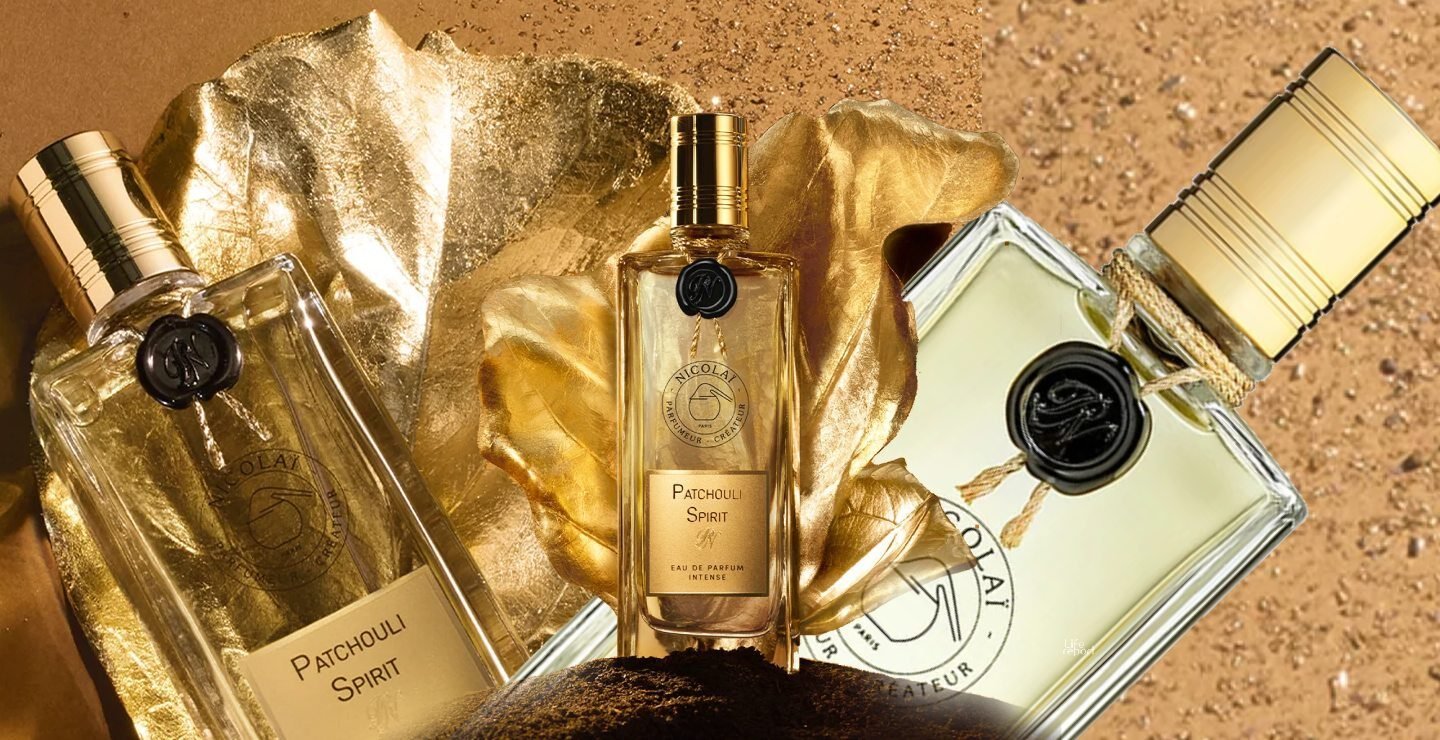
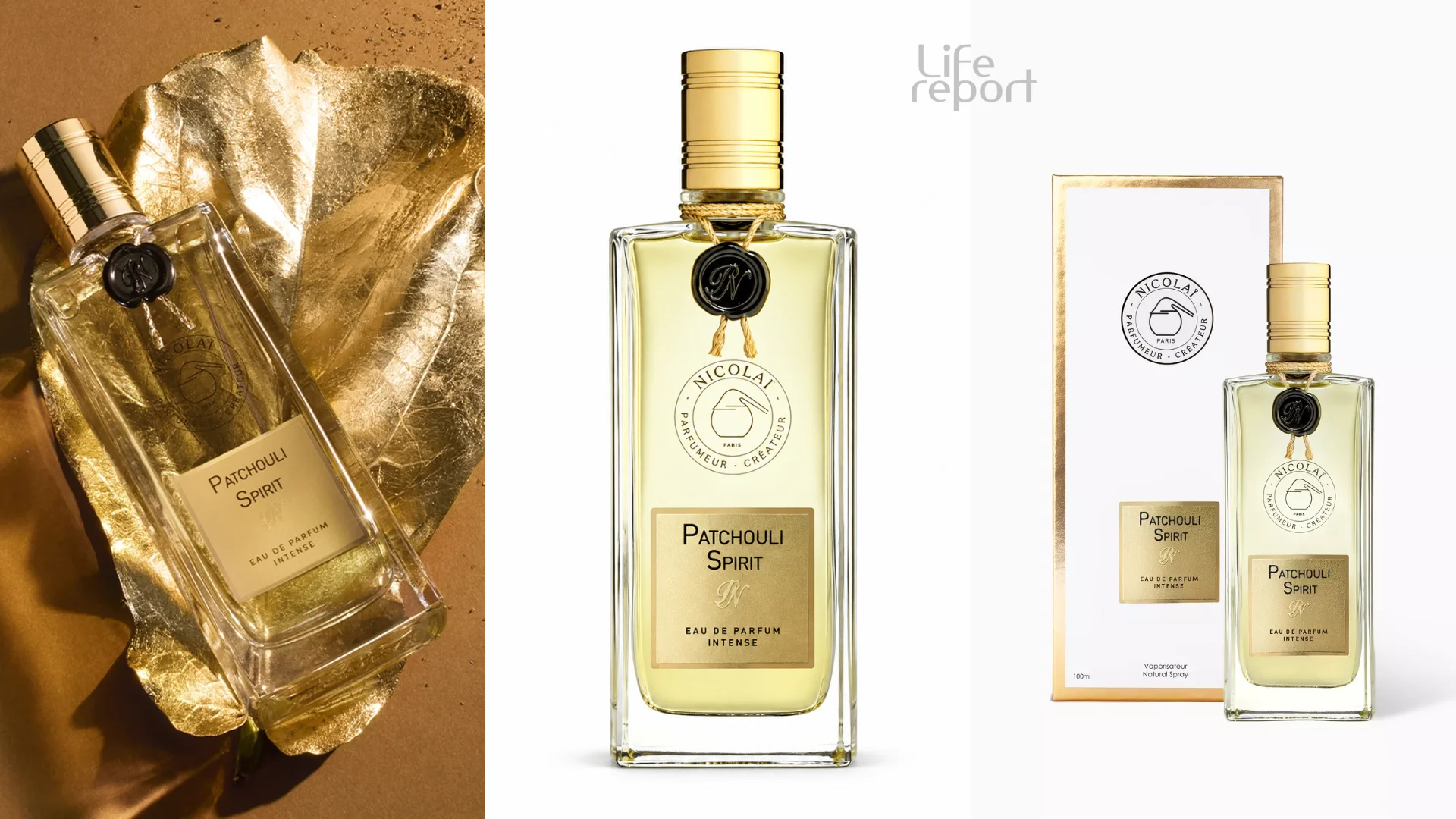
Into this milieu arrives Patchouli Spirit Eau de Parfum Intense by Nicolaï Paris, a fragrance with a pedigree that reads like a perfumery syllabus. Its author, Patricia de Nicolaï, is a descendant of the Guerlain perfumer family. She studied chemistry before training at ISIPCA in Versailles and, in 1988, became the first woman to receive the Prix International du Jeune Parfumeur, awarded by the Société Française des Parfumeurs. A year later, she founded Nicolaï Paris with her husband, Jean-Louis Michau, becoming the first woman in the world to establish her own perfume house – a quiet act of insurrection at a time when creative independence in perfumery was largely a gentleman’s arrangement. She also presided over the Osmothèque, the international perfume archive in Versailles, and in 2008 became the first female perfumer to be made a Chevalier de la Légion d’honneur. At its ceremony on 7 November 2026, ScentXplore presented her with its Lifetime Achievement Award, recognising nearly four decades of independence and contribution to perfumery.
View this post on Instagram
Patchouli Spirit is, in a sense, a late-career conversation with herself. Her Patchouli Intense, released in 2009, was elegant, natural-smelling and tenacious, but de Nicolaï felt it was never quite patchouli-centric enough. The new composition keeps the material squarely at its centre and warms it until it reads as liqueur-like rather than earthy. It launched as a Harrods exclusive in February 2025, appeared in the house’s main collection at Esxence in June 2026 and went on wider sale that September. The published note pyramid has since evolved: lavender has disappeared, while angelica and mandarin have joined orange in the opening. ‘With Patchouli Spirit, I wanted to reveal the sensual and radiant soul of patchouli by exploring a more ambery and liqueur-like facet. It is a solar creation where the majesty of patchouli essence is enveloped in a suave warmth,’ de Nicolaï has said.
What that translates to on skin is a patchouli that has been to therapy and come back with better posture. The opening is a lively burst of orange, angelica and mandarin – citrus and herbs cutting through the material’s notorious density with the precision of a well-made martini. At the heart, Indonesian patchouli reveals its woody profundity, wrapped in Turkish rose absolute, pelargonium and a flicker of cinnamon. The base is where the real seduction happens: sandalwood, vanilla, incense, amber and Ambroxan settle into a warm, resinous hum that lingers with remarkable depth. This is not the patchouli of festival mud and earnest veganism. It is patchouli in a tailored jacket, holding a glass of something amber and refusing to explain itself.
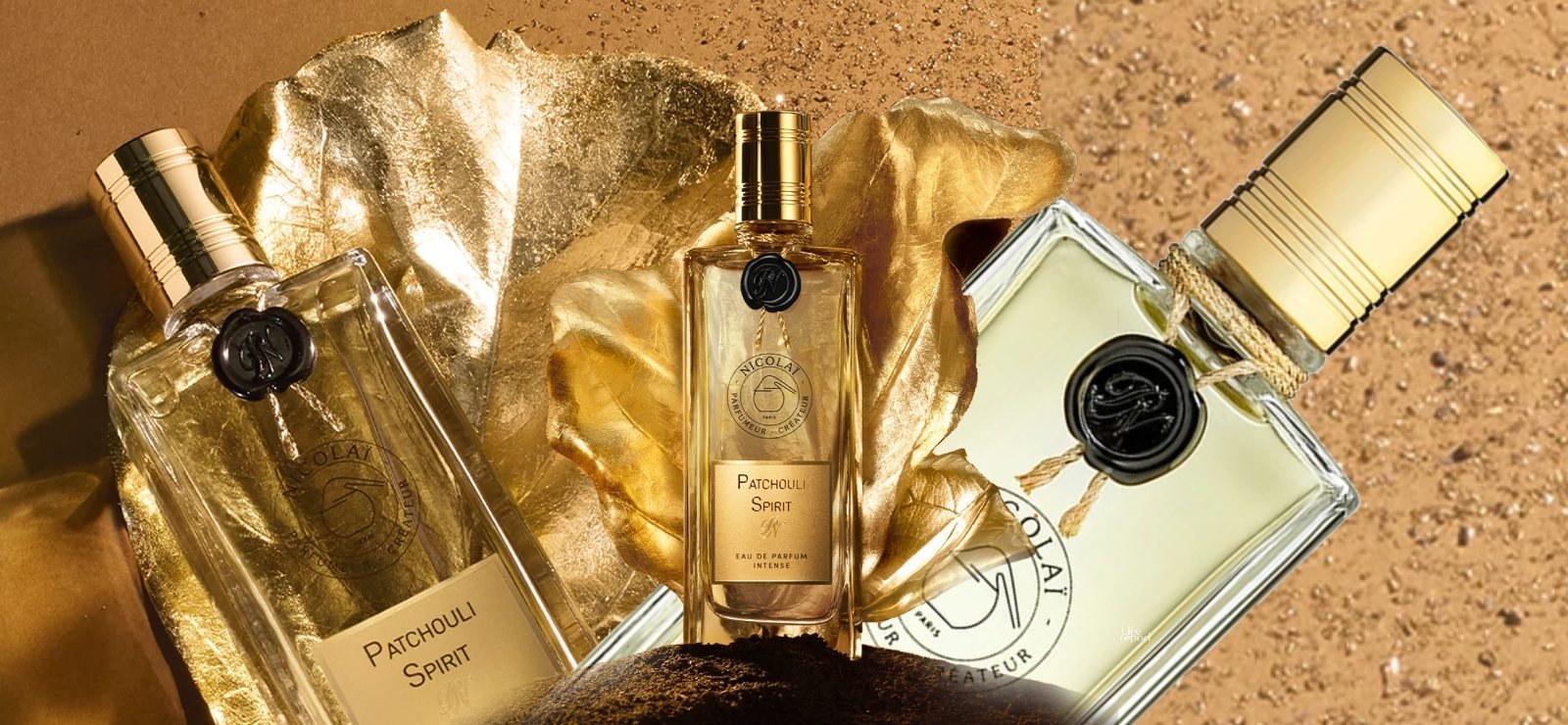
The timing is not accidental. Patchouli has been quietly undergoing a technical and aesthetic reappraisal. Rather than treating the material as a single, bluntly earthy note, perfumers can work with selected fractions that bring particular facets into focus. Nicolaï says Patchouli Spirit contains a rare ‘Patchouli Heart’ fraction, intended to reveal what the house describes as the ingredient’s deepest, noblest facets. A generation reared on TikTok’s ‘grandmacore’ discourse has also learned to stop fearing the notes their mothers were told were old-fashioned; classic accords, rather than simply classic bottles, are having a moment. In the Gulf, the shift is even more pronounced. Gen Z and millennial consumers in Dubai and Riyadh are hyper-connected, ingredient-literate and increasingly allergic to loud status symbols, gravitating instead towards scarcity, craft and what the industry has taken to calling quiet luxury. They do not want to smell rich. They want to smell like they know something you don’t.
Dubai, meanwhile, has been busy becoming something more than a market. Global fragrance ingredient houses have been building creative capabilities in the city: Symrise opened Jardin Arabia, its fine-fragrance creation hub, in 2023, while IFF inaugurated its 2,000-square-metre Scent Dubai Creative Centre in 2025. A dedicated niche-perfumery platform, Notes Dubai, has announced its inaugural edition for 21–23 January 2027, with Amouage and Xerjoff as founding partners. The UAE’s fragrance market, estimated at US$0.91 billion in 2025, is forecast to reach US$1.15 billion by 2030. The old association with dupes and designer pastiche still lingers, but the more telling statistic is outward: the UAE ranked fifth globally by export value for perfumes and toilet waters in 2025. Taste, in other words, is no longer simply imported. It is being assembled, remixed and sent back out.
Plethora’s role in this ecosystem is less about selling bottles than about curating a certain kind of attention. The lounge model – part gallery, part library, part confessional – makes room for the slow, slightly awkward business of smelling, thinking and changing one’s mind. It is a useful corrective to the scroll-and-buy logic that governs so much of contemporary luxury, and a reminder that a fragrance like Patchouli Spirit cannot be reduced to a note list. The citrus opening is not a gimmick; it is an argument. The rose is not decoration; it is diplomacy. The incense is not mysticism; it is structure. What de Nicolaï has built is a patchouli that does not raise its voice, which is perhaps the most Dubai-appropriate gesture of all.
View this post on Instagram
There remains, of course, the matter of patchouli’s reputation. It is a note that people love to announce they hate, usually before discovering that they have been wearing it, in some polished and anonymous form, for years. Chanel’s Coromandel made a luxury benchmark of it; a hundred niche releases have since used it as a shadow beneath rose, amber or vanilla. Patchouli Spirit does not try to erase that history. It simply declines to be held hostage by it. The earthy depth is still there, but it has been burnished, sweetened at the edges, made companionable. It is a fragrance for people who have outgrown the need to smell like a manifesto.
Which may be the quietest provocation of all. In a city that excels at the grand gesture, Patchouli Spirit proposes something subtler: a scent that unfolds over hours rather than announcing itself in seconds, that rewards the wearer who stays close enough to notice the dry-down shift from resinous warmth to something almost powdery and clean. It is the olfactory equivalent of a well-cut jacket in an unusual fabric – unnoticed by most, quietly appreciated by the few who know what they are looking at. Or, in this case, smelling.
ALSO READ: The Zombie Cell Protocol: Inside Clé de Peau Beauté’s Two-Decade War on Time