There is a particular moment, as the Gulf sun softens to a burnished gold, when the air in Dubai hums with a latent energy – a prelude to the crescendo of creative ambition that is Dubai Design Week.
The air itself seems to crackle with a certain energy, a prelude to the symphony of creativity about to be performed. And in this annual ritual, where the desert’s austerity meets an almost Venetian flourish of imagination, the stage is once again set for Dubai Design Week. This year, from the 4th to the 9th, under the esteemed patronage of Her Highness Sheikha Latifa bint Mohammed bin Rashid Al Maktoum, the festival returns for its eleventh act, promising not just to display design, but to question its very soul.

The theme, one gathers, is one of quiet introspection amidst the grandeur. There is a deliberate shift from the overtly spectacular to the thoughtfully significant. As Natasha Carella, the Week’s director, posits with elegant clarity, the programme explores design as a “social connector, a civic and cultural force.” It’s a refreshingly human-centric approach in a city often synonymous with the monumental, asking how design can bridge not just spaces, but generations and geographies.
The heart of this exploration beats in the winning Urban Commission, awarded to the UAE-based studio, Some Kind of Practice. Their proposal, When Does a Threshold Become a Courtyard?, is a poetic inquiry into that most ancient of spatial typologies. In a region where the courtyard – the housh – was never a formalist’s fantasy but a pragmatic response to climate and community, their work feels profoundly authentic. It’s a reminder that the most luxurious space is not always the most expansive, but often the most intimate, the most thoughtfully conceived. They are not building a monument, but setting the conditions for one to emerge from “the dialogue between climate, craft and community.” One can almost hear the faint echo of conversations past and future in the space they will create.
View this post on Instagram
Naturally, the mainstage spectacle remains Downtown Design, the anchor fair at the d3 Waterfront Terrace. It is here that the world’s design aristocracy comes to present its latest wares. The usual suspects – Kartell, Poltrona Frau, Vitra – will hold court with their timeless elegance. But the true connoisseur will look for the new dialogues: the Parisian opulence of Stéphanie Coutas making a welcomed debut, the bold artistry of Draga & Aurel, or the striking pop-up from the Italian jeweller Buccellati, conceived by the duo david/nicolas. One anticipates the Solaire Lounge by Veuve Clicquot – a perennial favourite for those who appreciate champagne and good design in equal measure – to be, once again, the epicentre of civilized congregation.
Yet, to focus solely on the fair would be to miss the texture of the week. The Editions section, for instance, is where one finds the whispers of true collectors. It’s a cabinet of curiosities offering limited-edition pieces, from the AI-driven artistry of Ila Colombo to the global launch of the Bureau of Innovation, presenting one-of-a-kind works by masters like Tom Fereday. It feels akin to discovering a rare first edition in a quiet bookshop – a personal treasure in a world of mass production.

The outdoor installations, over thirty of them, will transform d3 into a veritable design safari. From the National Pavilion UAE’s Pressure Cooker – a prototype exploring food production through architecture – to a modular wooden structure by Japan’s Nikken Sekkei employing traditional sashimono joinery, the journey promises to be one of constant discovery. Even BMW Middle East, the automotive sponsor, is eschewing a simple car display for a bespoke, design-led installation. This is design as experience, as narrative.
One would be remiss not to mention the talks programme, headlined by the inimitable Tom Dixon in his Dubai debut. His presence alone is a masterclass in the alchemy of design, brand, and personality. It is the kind of event where one listens not just for the ideas, but for the sheer pleasure of hearing a master craftsman of culture discuss his work.
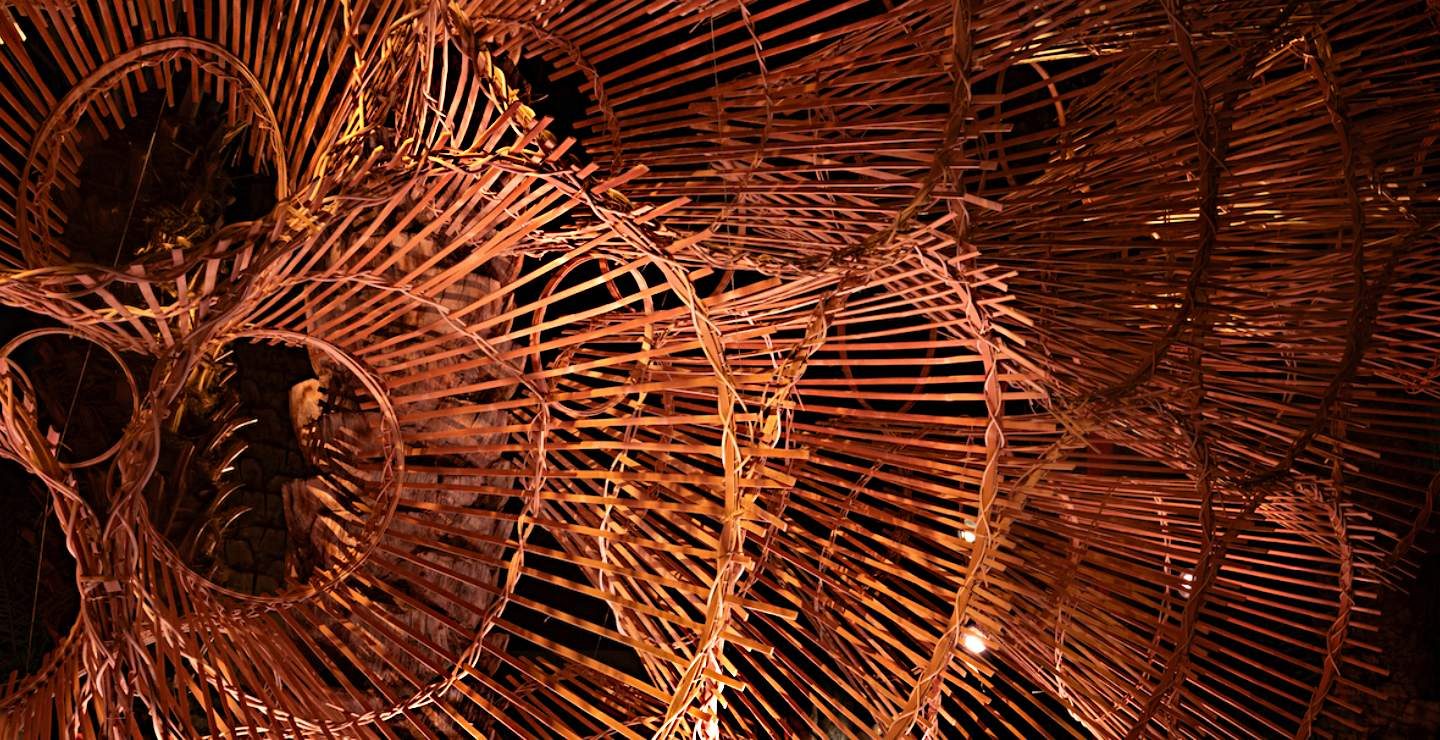
In the end, Dubai Design Week 2025 feels less like a trade show and more like a sophisticated salon. It is a confluence of sheikhs and designers, of global brands and local artisans, of grand pianos in showrooms and the humble, woven basket elevated to art. It understands that luxury is not merely the gleam of polished brass or the price tag of a limited edition, but the luxury of thought, of space, of connection. It is a week that asks us to pause in the courtyard, to appreciate the detail in the ornament, and to remember that the finest designs are those that, quietly and beautifully, design a better us.